Back in 1808…
Back in 1986…
Back in 2002…no, that’s not right either…back in September 2024, our Chair and Secretary went on a jaunt around Calderdale inspecting some closed non-conformist graveyards, and their final stop was Cross Lanes Baptist up the Buttress, above Hebden Bridge, to scout out some stones that linked either to Lumbutts (a shared interest) or a former Nuisance Inspector (purely the Secretary’s remit). On their way back downhill the Chair stopped to talk to a lady with an elderly Boston terrier, and the Secretary wandered around humming to herself and looking at rocks and squirrels and and leaves. She then jumped a little: on the ground in between two setts was a rubber bottle stopper, and when she picked it up, saw “G. Baldwin Todmorden” and a big B on the top. What a find! She pocketed it and went about her life.
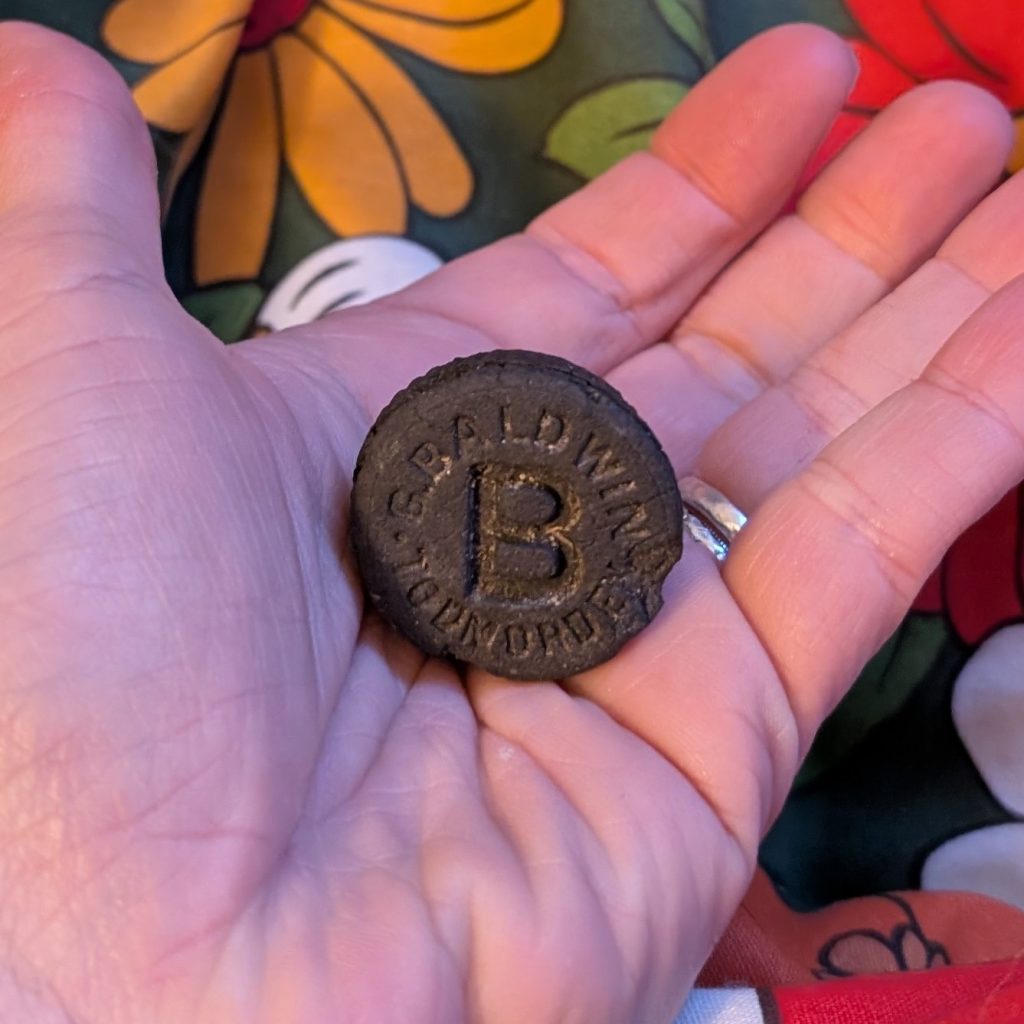
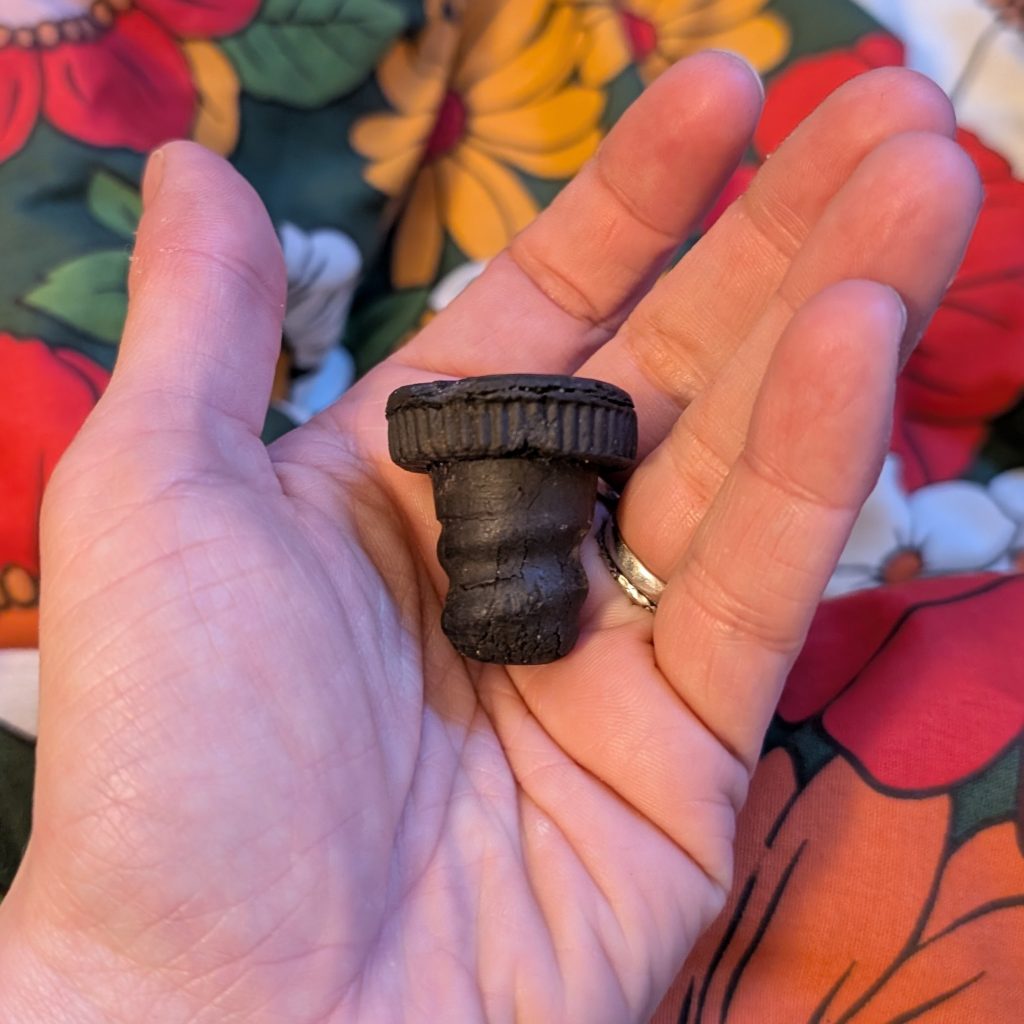
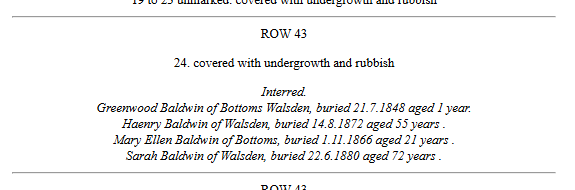
Fast forward to a few days ago, when the now-very-sinusy Secretary remembered that the researchers had not quite gotten around to looking at the fateful Baldwin grave’s inhabitants, and went to look at the Todmorden Antiquarian Society’s transcript. She about fell out of her sickbed. Greenwood Baldwin? But the year is all wrong. And of course it is, because the Greenwood Baldwin who sold soda water to Todmorden at the turn of the 19th Century was actually Greenwood Baldwin the second. Not a junior, but a second. A second chance.
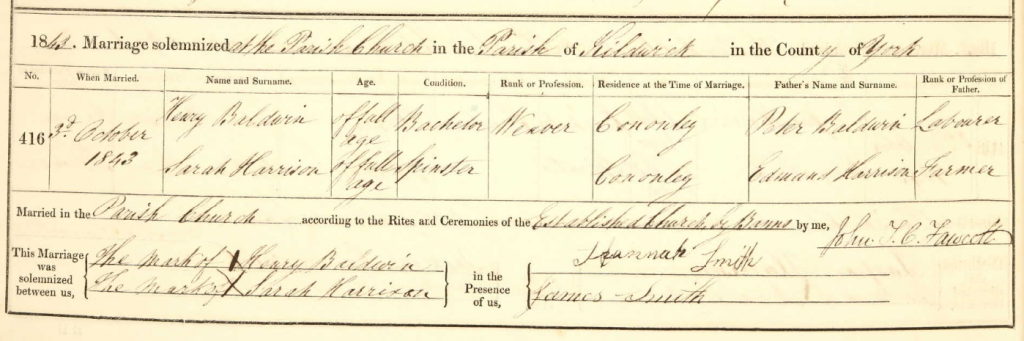
Now…back in 1808, a little girl named Sarah Harrison was born in Kildwick. Twelve years later her future husband Henry Baldwin was born in Cononley. Henry was a weaver and when he travelled down the Aire to Kildwick and met Sarah, she caught his fancy in a way that the age gap was powerless to interfere with. They were married at the parish church there in 1843, “of full age” but really 23 (Henry) and 35 (Sarah). Two years later their first child, Mary Ellen, was born. The Baldwins were on the move though and she would be their only child born up near the North Yorkshire border. Two years later their second child and first son, Greenwood, was born, and his birth was registered here in Todmorden. His forename came from Sarah’s mother’s maiden name.
Little Greenwood didn’t do so well and he died a year later, and was buried here at Christ Church at the back of the slope up to the northern side of the church itself. Henry was a cotton weaver and the Baldwins were living at Bottoms, where they would stay for the rest of their lives, so why they chose Christ Church rather than St. Peter’s and why they paid the extra money for a family plot are mysteries. They had a connection to this particular church and part of the town that we can’t explain, we suppose. Life went on and more children were born – Sarah Ann in 1848, Susan in 1850, and Greenwood “the second”, our man from the bottle stopper, in 1852. By this Greenwood’s birth Sarah was 44 years old and it’s not very surprising that he was the last child to be born.
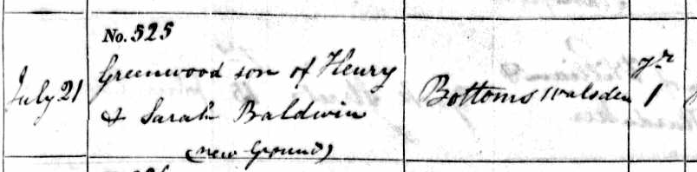
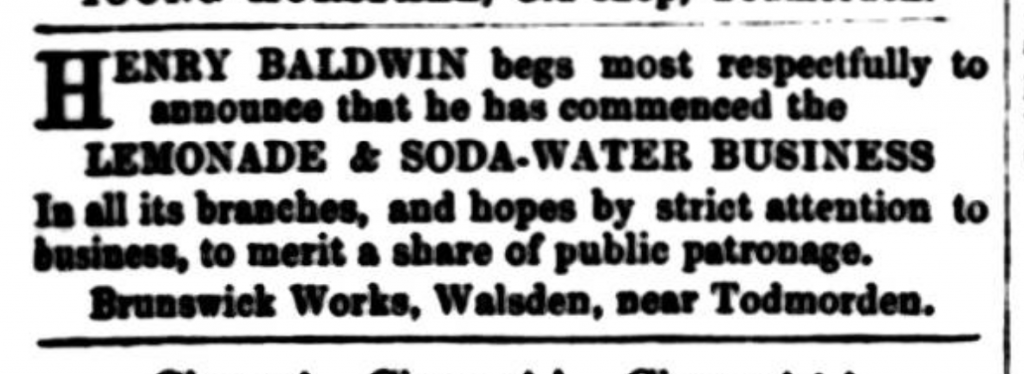
Henry continued to weave but by 1861 he had found another occupation – that of pop manufacturer. Carbonated drinks had been around since 1783 so he was hardly a trailblazer, but we can still pause to wonder what soda or lemonade might have tasted like back then. Times were still tough though and the couple lost another child, Mary Ellen this time, who died in 1866 aged 21.
The pop business’s success is difficult to determine, since by 1871 Henry was being described as a “farmer of 7 acres and ginger beer manufacturer”…doing a bit of both? And young Greenwood was working as a carter then, so again, not looking quite so much like a dynasty as of yet. Closer inspection of the newspapers gives a clue as to what was coming though. By 1867 Henry was operating out of the Brunswick Works – wherever that was – and manufacturing on his own account, and Greenwood was busy taking science classes at the Mechanics Institute, which makes him working as a carter look more like he was delivering pop rather than doing general labourer work.
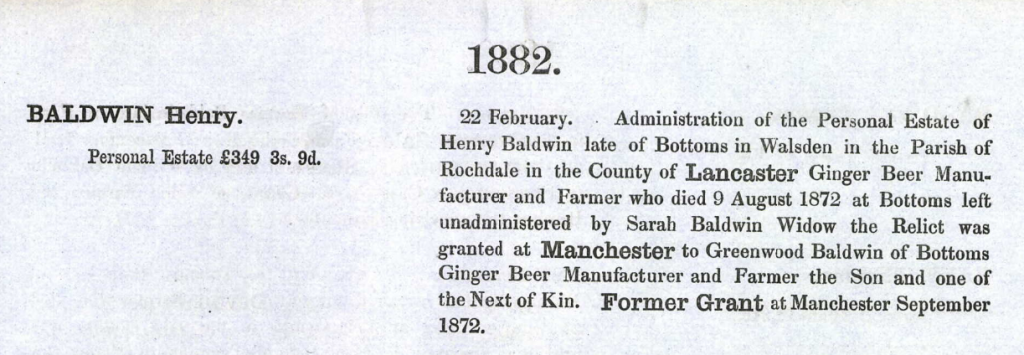
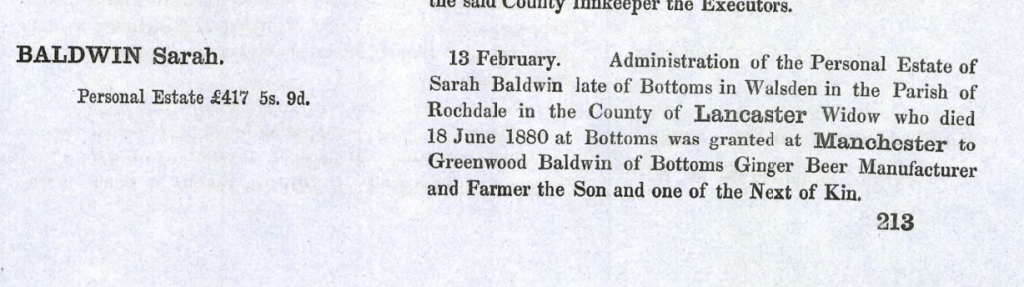
In August 1872 Henry died and became the third person into this grave, and his affairs appear to have been somewhat in disarray afterwards. Not necessarily because of any financial difficulties, but because Sarah didn’t administer his estate. She was granted the ability to in September 1872 but for some reason it seems to have never been formally concluded. She and Greenwood did keep the business going, though, and when she died in 1880 there was more money left to pass along than there had been in 1872, so she did something right. Greenwood meanwhile went on to bigger and better things as you can see from the story of his son and daughter in law, which is only fitting for someone who had a second chance at holding a name.
Now, back to 1986…much time has passed. Someone from the Royal Commission on Historic Monuments visits Todmorden as even at this early date there have been some rumblings about the possibility of closing one of the town’s churches – just disagreement on which one. They wander into the church and take a number of clear black and white photos of the interior, and then has a little wander around the graveyard. While strolling along below the church they stop, look over the yard, and think “now here’s a nice shot”. They back up so that the graves right in front of them are clear in the foreground, snap, and move along.
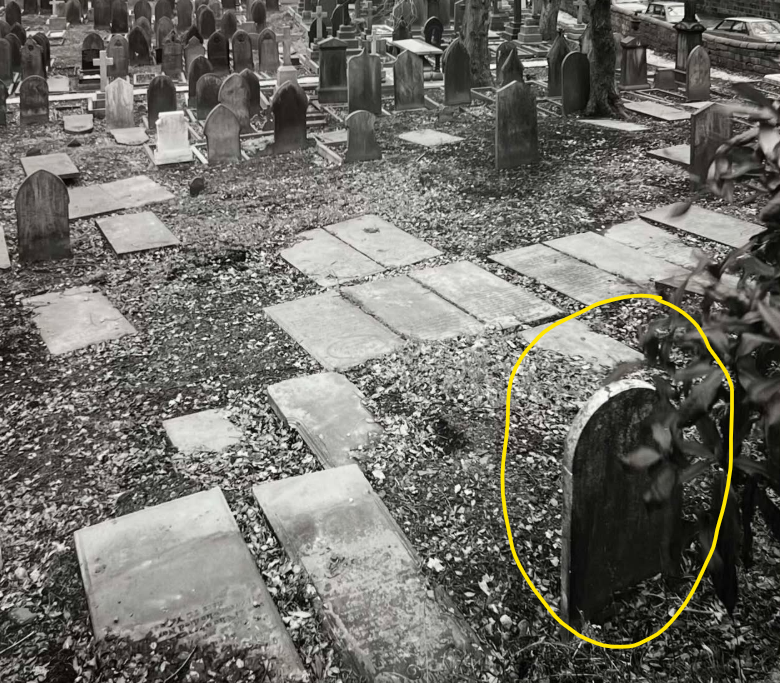
The Baldwin stone is circled in yellow.
Now, back to 2002…the church is closed and has been sold to a private buyer. Sometime between 2002 and 2006, someone builds two retaining walls below the church. Whether this was to create parking spaces or to solve a subsidence issue is unknown, but the builder was, shall we say, highly motivated, and did not bother to get permission to cover up the graves at the bottom edge of the above photo. The flat ledgers to the left are now left with their bases poking out from the bottom of the wall, like the Wicked Witch of the East’s stripey feet, and the Baldwin stone is entirely encased between the walls. If it weren’t for the 1980s ACT transcript we wouldn’t know it was there. It wasn’t visible anymore by 2006 when the Antiquarians went through.
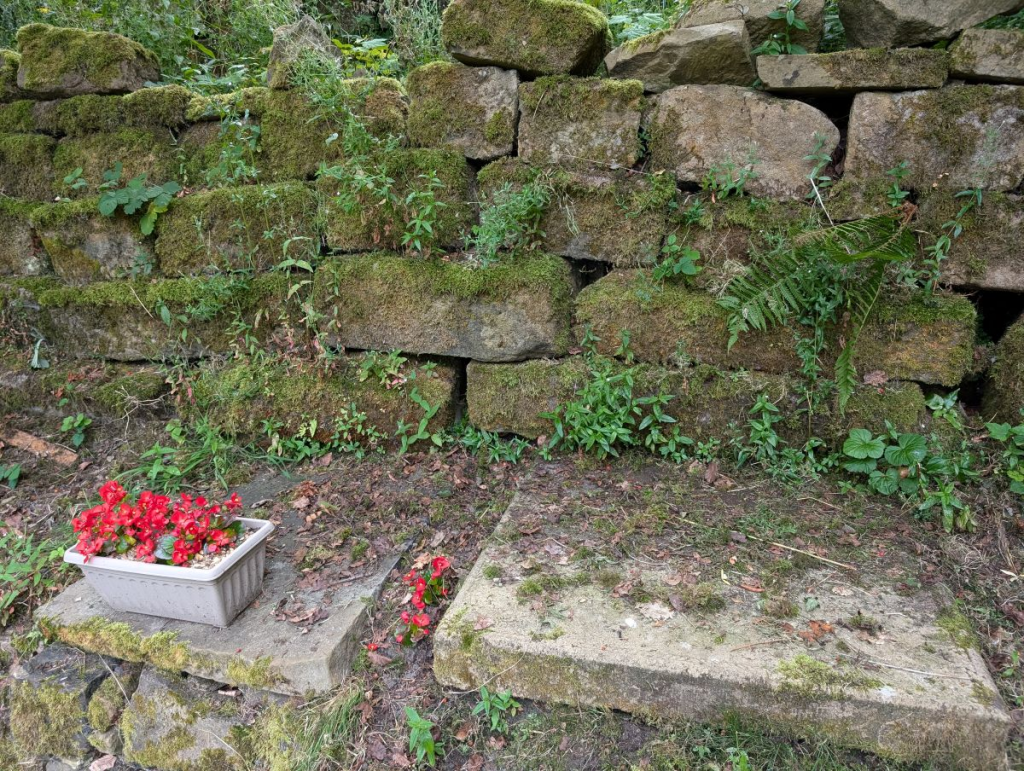
Now, back to September 2024, and the start of this story.
And finally now, back to today. What’s to be done? That all depends on being able to find out why that wall was built, and what remediation is possible both structurally and cost-wise. The Baldwins might need to stay buried, and that rankles like hell, but at least now we know what we’re looking for in the event that we can bring them back into the light.