A lost plot marker – a family who left – and two brothers who never met…and perhaps a grandfather and grandmother to boot.
Edmund Tattersall Stephenson had a glorious name and a dirty job; that of engine stoker. He had been born in Newchurch in 1860 to John Dewhirst Stephenson and his wife Harriet, formerly Tattersall. Edmund was their first legitimate child, their son James having been born a year before their marriage in 1859. John was a stripper and grinder, so part of the machine shop section of a cotton mill, and Edmund’s career as a stoker and later fireman is no surprise as a result. The family moved around and by 1871 had become part of Todmorden life. The Stephensons lived at Lower George Street, right on the edge of that long string of mills that stretched from Albion and Canal Street down to Derdale and Sandholme. He could have worked at any of them. By age 10 Edmund was working as a mill operative and probably hating it…it’s hard work for a child!
Martha Ann Greenwood was also born in 1860, a few months earlier, and also near Bacup – in her case it was Lumb. Her parents Robert and Jane (Holt) started off as weavers and were also travellers. Robert was originally from Briercliffe and Jane was a Heptonstall lass, but they were also willing to travel for work and within a year of Martha’s birth had come to Lydgate to live at Canteen and work in the mills there. 1871 found the Greenwoods up in Halifax, but they came back to Walsden in time for August 1880, when she and Edmund were married at Roomfield Baptist. An interesting choice given that by now the Stephensons were living at Inchfield Buildings, but maybe they had a sentimental connection to the place.
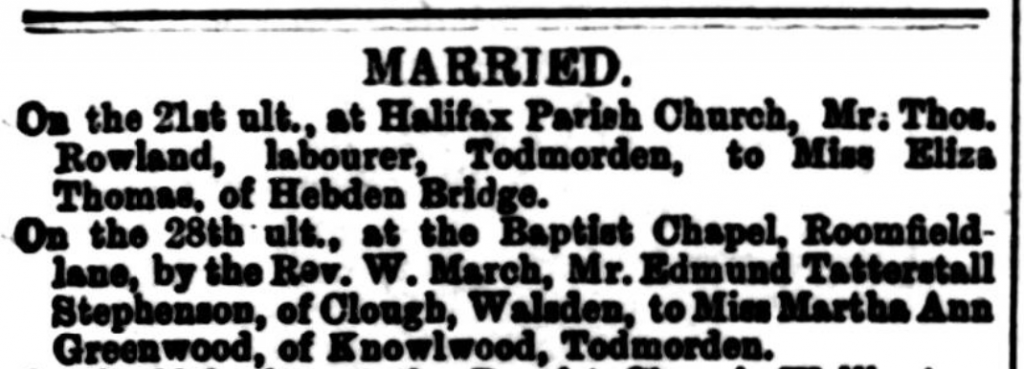
Another reason to perhaps get married a few miles down the road was that Martha Ann would have been a visibly pregnant bride – their first child, daughter Harriet Jane (named for both their mothers), was born in November. Next came John Robert (named for both their fathers), born in January 1882. Poor little John Robert fell prey to the usual dangers of Victorian childhood and two years after the birth of their first child Edmund and Martha lost their second. Whooping cough and acute bronchitis were the culprits.

He was buried here, next to young John Thomas, and right before William Henry Gledhill. The plot marker – now missing thanks to unsupervised construction workers in 2002 – had Edmund’s initials, E. S. on it, meaning the plot was paid for and intended for family.
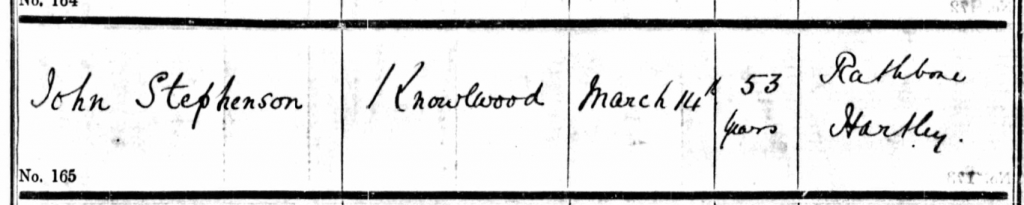
Edmund and Martha had a daughter, Ruth, in 1884, and things were looking a little better, but this wasn’t the end of their losses. Edmund’s father John would die up at Stansfield View, in the workhouse, in 1885. Politely the burial register only mentions his home address at Knowlwood, but the newspaper wasn’t so discreet which is how we know he was up there. Harriet went back to Shawforth to be with her family but died there the following year. Both are buried at Christ Church and with nowhere else to locate them we have to conclude that they’re likely to be in this plot; they were Edmund’s parents after all. Martha’s parents were in rude health and would both live to decently old ages.

With Harriet buried there was time to think of their family again, and in early 1887 the couple welcomed another son, who they optimistically named John. Unfortunately this John was as ill-fated as the first one and in July that year he also succumbed to now easily treatable ailments. This time it was bronchitis and asthenia (unusual levels of weakness).

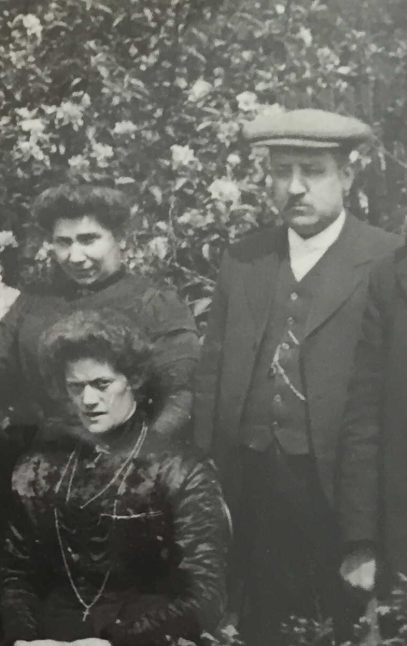
This little John, the second son and third into this grave, is also likely the last burial in this grave. The 1891 Census shows the Stephensons in Shaw, well away from Todmorden, and they would stay well away for the rest of their days. They had four more children, two daughters and two sons, none of whom were named John. Martha died in 1943 and Edmund in 194 and both are buried at Shaw Cemetery, along with some of their adult children.
That’s why this stone was never updated; life went on, distance meant any well meaning thoughts were easier to allow to pass, and there were more children to take care of and support…lots of reasons, like there are for so many other plot markers in Christ Church. It’s fortunate that the plot marker was recorded at all, prior to the school extension being built, or their story would be even harder to tell.
Pingback:S6.7 – Sarah Alice, Florence Mary, Alice Stansfield and Harry Victor Stephenson – F.O.C.C.T.