A plot marker that was getting in the way, and now rests temporarily at 37A.30 until it can be put back where it belongs. This does seem to be a problem we see a lot at Christ Church…and which there is a small rant about at the end of this story.
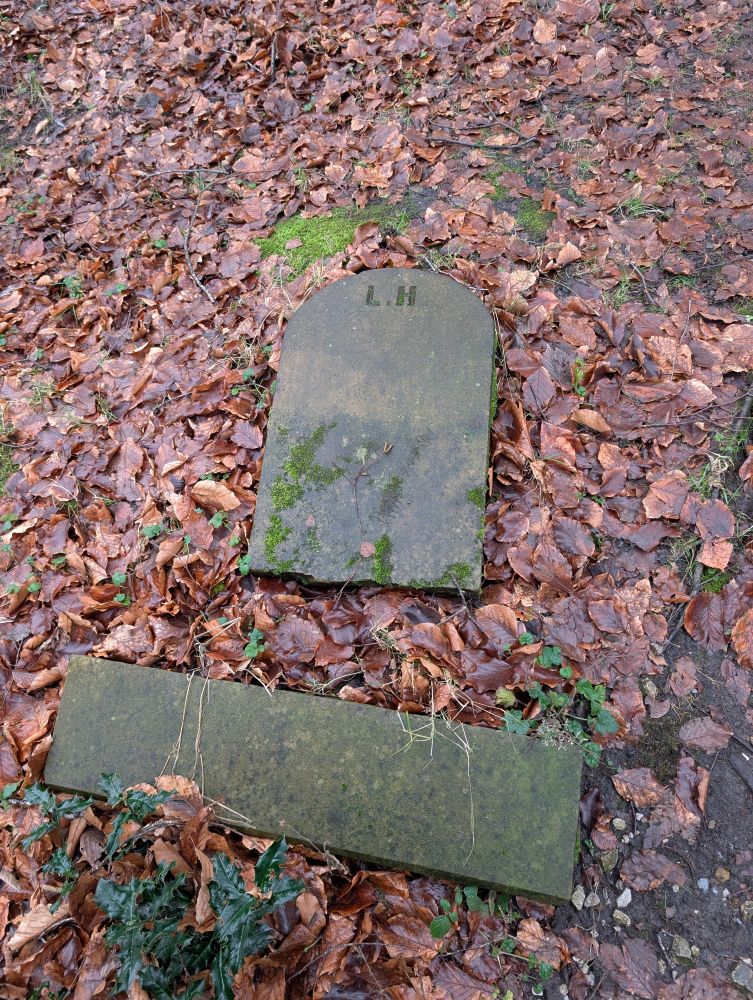
L. H. here was once at 37.33, right before Mary Ann Firth (died December 10th 1871) and Sally Barker (died December 30th 1871). That’s how we knew where to look, and it was a burial on December 12th that jumped out at us: Sarah Howorth of George Street, aged 8 months old. L. stood for Luke, Sarah’s father.

Luke Howorth was a joiner who started out as a farmhand working alongside his father James at Croft Barn up at Lumbutts. Even as late as his marriage in 1868 he was describing himself as a “farm servant” but perhaps marriage changed that. It definitely changed his address, which became George Street in the town centre. The young woman in question? Eliza Balmforth, from Tonge, west of Bury. No jokes about how “there was a young lady from Tonge” now…Eliza was a cotton winder who was doing the best with a difficult lot. Her lot was that she became pregnant while unmarried, at the age of 23, and ended up lodging with her older sister Jane and her husband and daughter rather than staying in the family home. She kept her daughter Emma close though.
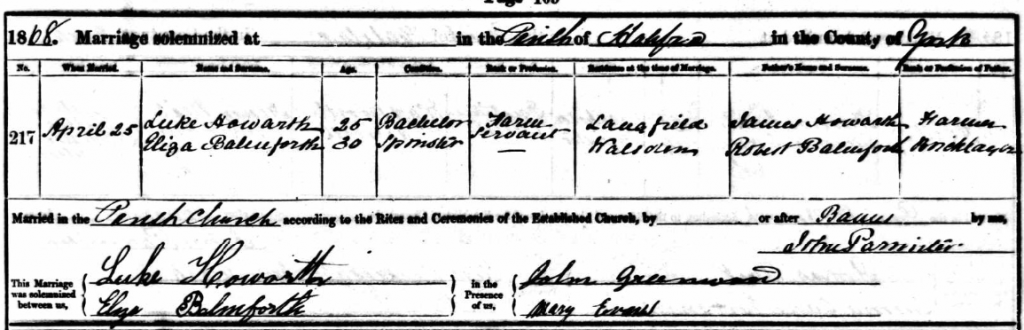
Five years Luke’s senior, she kept Emma with her after their marriage, which wasn’t always the case in that time. Luke and Eliza had two children together, Sarah in 1871 and Luke Jr. in 1873. We know little Sarah’s fate already, but what about little Luke? Little Luke thrived, and he and Emma kept Eliza company. This was partly because Luke Sr. was not doing so. Whether he was travelling for work or using work as an excuse for travel…well, we don’t know, but Eliza had to make ends meet by working as a caretaker at the Masonic Hall. Luke Sr. was not at home in either 1881 or 1891 and he died in Rochdale Infirmary (aka the workhouse hospital) in 1898, having never come home again. He’s buried somewhere at Christ Church, possibly here.
What of Eliza and her children though, because they had lives defined by more than their husband or father’s absence. Emma married well, to Abraham Ashworth, and their story will be told another time since they’re buried down at 19.41. Luke Jr. also married well, to Mary Grace Smith, and they stayed near to Eliza who had moved over to Cobden and was living on her own. Eliza looked after the Masonic Hall for a while but by 1901 she had retired and was making do as best she could. No lodgers, no moving in with her children, just Eliza. Maybe that was what she had always wanted – a little space for herself.
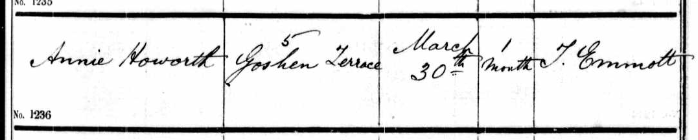
Luke Jr. and Mary Grace had two children, Annie (who died in 1895 only a month old) and Thomas. Annie is also buried at Christ Church. Luke Jr. and his family would eventually emigrate to New Zealand and live out their days down under.
Time passed and Eliza’s health began to fail, and she moved in with Emma and Abraham and their children. In October 1911 she died and was buried here too; perhaps she, and Annie, and even Luke Sr., are buried in the L. H. grave alongside Sarah. Are Luke and Eliza resting easily with each other, we wonder?
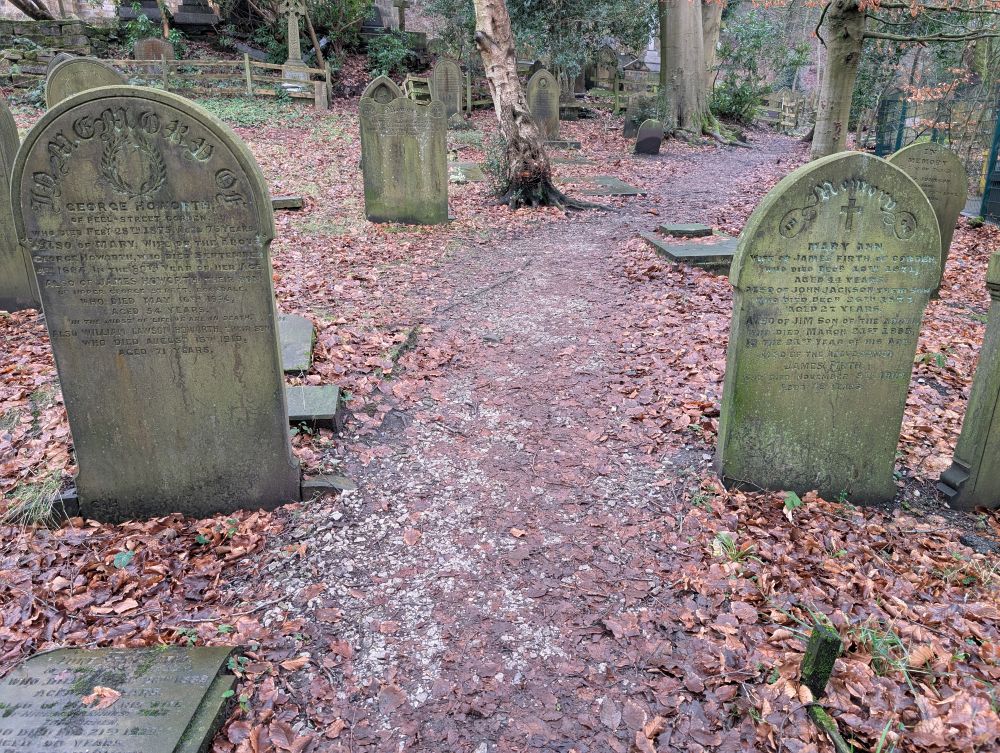
We also wonder…why was this plot marker moved? For convenience? If so, what a shameful thing to do for mere convenience, to move someone’s plot marker. Safety in graveyards is a concern, and some caution is warranted; but creating footpaths where none were before should be done around what is already there. The L. H. plot marker once stood between the two stones here (you can see it just behind the stone on the left) and once upon a time this was perfectly fine, since the path to the school made a left-hand turn and then went up towards the church entrance. The 2002 extension, of course, covered that pathway up. People wishing to cut through wanted other options, and whoever laid down the gravel screed here for a new pathway at some point after 2006 saw L. H., sighed to themselves, and yanked the marker from the ground and placed it nearby. They probably thought they were being respectful enough, putting it off to the side rather than throwing it hither and yon, but it actually wasn’t very respectful at all was it? But who cares, they’re old graves, they don’t matter…
Unfortunately this is just one small symbol of the larger problem this graveyard has been facing for decades. Where the dead are seen as an inconvenience, any indignity – small or large – is acceptable when trying to get what you want.
Brilliant bit of research
It brings ordinary folk back to the living
I would like to think someone might remember me in 100 years x
Old graves matter, they are famies precious history. Don’t disrespect them, honour them.